Android-first Nintendo DS emulation

dsnana
built for phones,
not just ported to them.

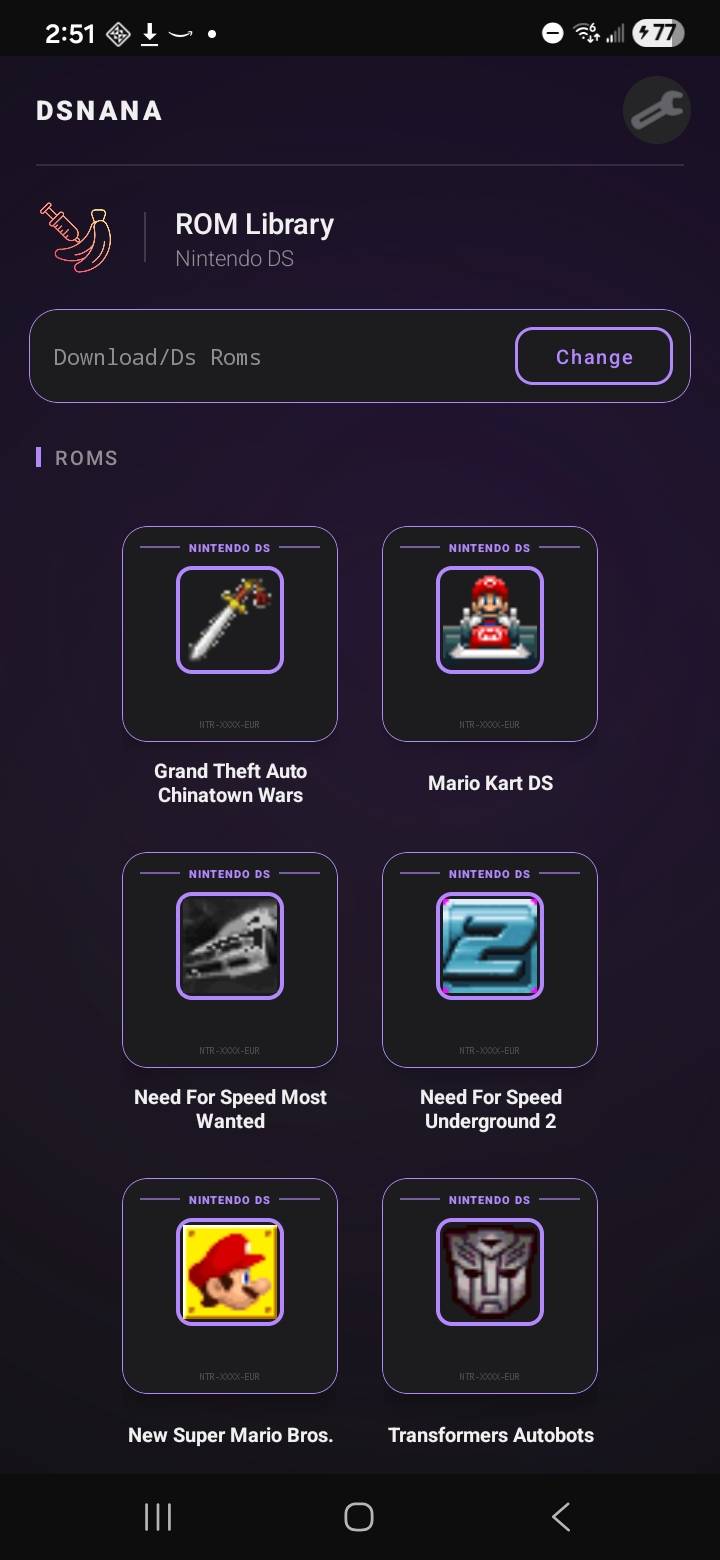
dsnana is what happens when you stop treating Android like an afterthought. It has GPU rendering, layouts that actually make sense on tall screens, controller-aware controls, DS Wi-Fi support, custom accent colors, and a UI that feels like an Android app instead of a desktop emulator squeezed into a phone.

Hardware GPU rendering
Live DS Wi-Fi transport
Custom accent colors
Controller-aware overlays

Everything that matters,
right where Android needs it.

The goal here is pretty simple: better frame delivery, less UI nonsense, smarter controls, and the kind of features Android players actually notice when they use the emulator every day.

Rendering

Hardware-accelerated display and 3D

dsnana uses GPU-backed presentation and a stable hardware OpenGL path for 3D, which means smoother output, less wasted CPU time on drawing, and better behavior in games that are rough on software rendering.

Layout

Phone-native dual-screen presentation

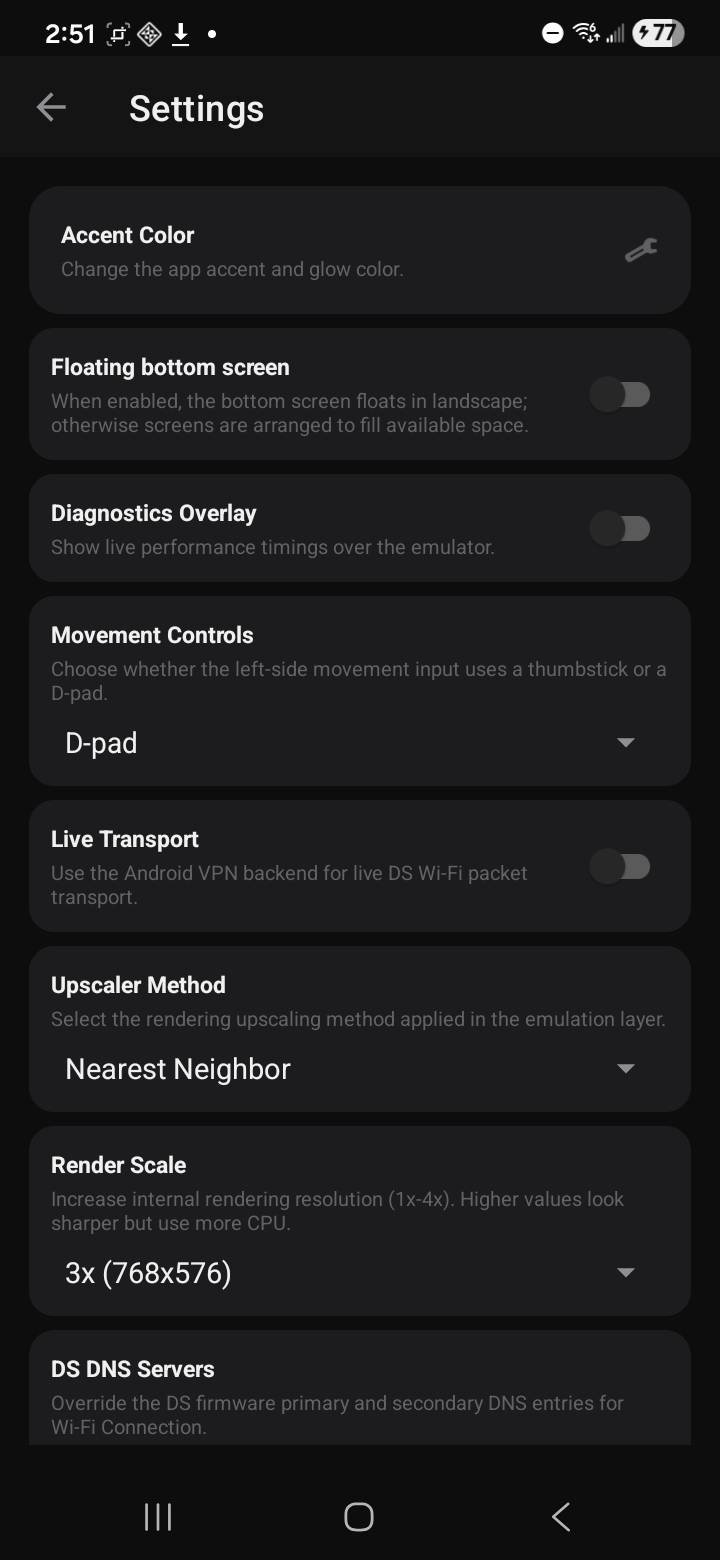
Floating bottom screen support, full-screen GPU presentation, and responsive layouts make the DS setup feel natural on modern phones instead of cramped, tiny, or weirdly desktop-shaped.

Style

Custom accent colors

You can tune the accent and glow color instead of being stuck with whatever theme the app shipped with. Small detail, but it makes the whole thing feel more personal.

Controls

Controller-aware overlays

Virtual controls can be hidden manually or auto-hidden when a controller is connected, so the screen stops fighting you the second you switch input methods.

Networking

Live DS Wi-Fi transport

dsnana includes an Android VPN-backed transport path for DS Wi-Fi packet handling, which is a much more serious answer to networking support than the usual maybe-later checkbox.

Power user

Render scale, upscalers, diagnostics, debugger

Render scaling, upscalers, diagnostics, and debugger tools are built in, so power users can actually dig in without turning the app into a mess for everyone else.

Why it feels better on Android

Plenty of Android emulators can technically boot games. The difference here is that dsnana was built around how people actually use emulators on phones: touch first, controller second, tall displays, high refresh panels, and zero patience for desktop UI baggage.

What dsnana prioritizes

An interface shaped for actual phones and controllers instead of a desktop emulator awkwardly shrunk down.
GPU-backed presentation with smoother frame delivery and less wasted work in the Android UI layer.
Features like accent themes, floating-screen layouts, and control auto-hide that feel native to how Android users play.
A real power-user stack with render scaling, diagnostics, debugger access, and DS Wi-Fi transport.

What that means in practice

Less desktop-port energy, more direct mobile usability.
Less screen clutter the moment a controller connects.
Better visual flexibility for dense, high-refresh Android displays.
A UI and renderer stack that feel tuned instead of generic.
Customization

Your emulator should look like yours

dsnana supports custom accent colors in-app, and this page mirrors that idea. The default here is a dark banana palette, but you can tap around and see how the vibe changes instantly.

Power options

Built for players and tweakers

You can launch a game and be done, or you can dig into render scale, upscalers, controller behavior, diagnostics, and debugger tools. It does not force you to choose between simple and capable.

Download dsnana

If you want a DS emulator that feels like it was actually built for Android, this is the one to try. Grab the APK and see the hardware renderer, controller-aware UI, custom theming, floating bottom screen, and the rest of the Android-specific work in motion.

Platform Android
UI style Phone-first
Rendering GPU-accelerated
Highlight Built around Android, not desktop leftovers